Greg Palmer is a novelist, specialising in history; people, places and ideas.
He says that the trouble with history is that it’s written by bloody historians.
Nevertheless, he’s had a long career writing about the things that capture his imagination; from Peterloo to The Wars of the Roses, from London Bridge to York Minster, from the Globe Theatre to hop-pickers in Kent. And he’s even written a book about the history of everything which is no mean feat.
And yet he still hasn’t written the book he promised Jack about The Black Swan.
Slacker.
THE MASK OF ANARCHY — 1985
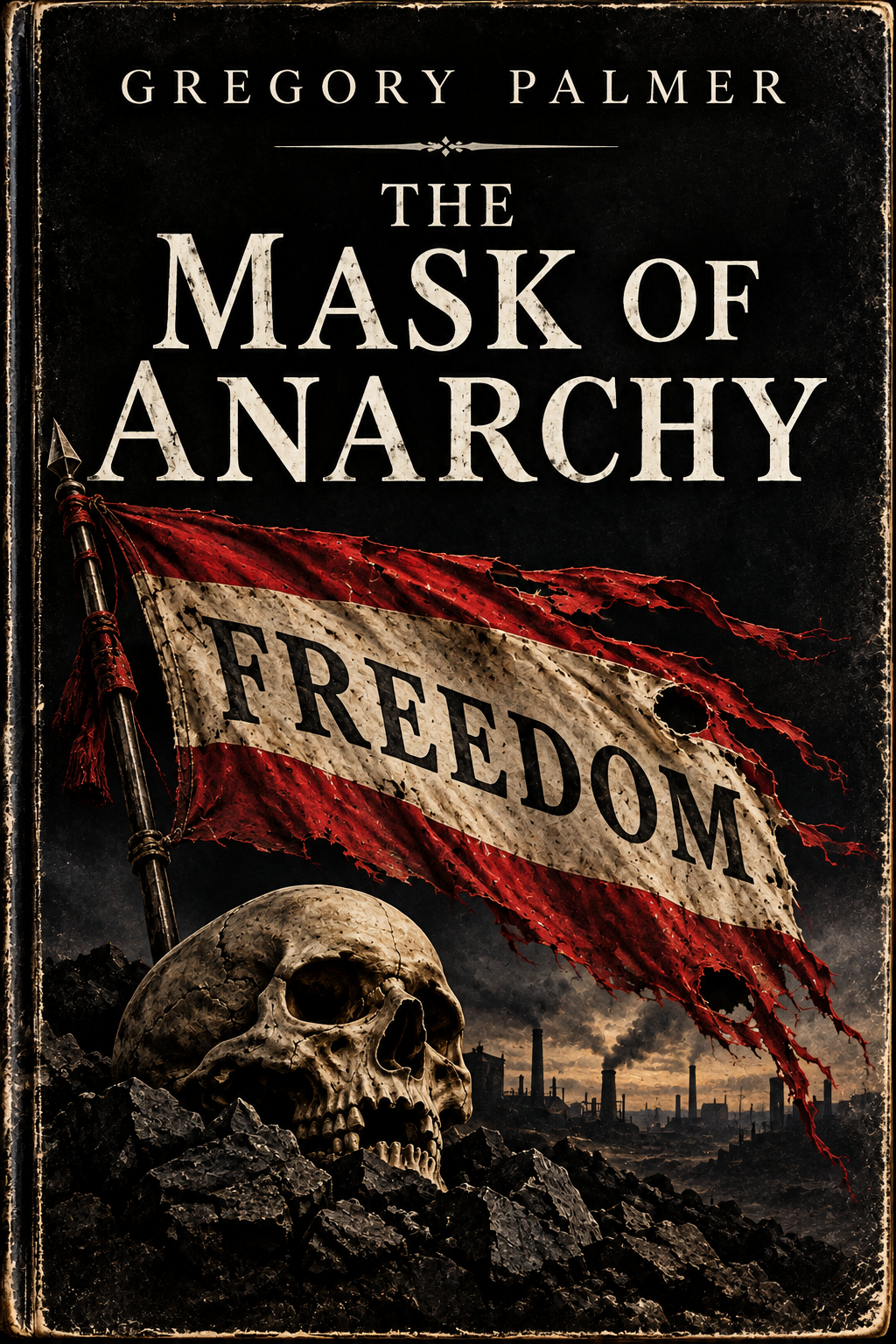
Set against the Sheffield Reform movement during of the Industrial Revolution, centred on the life and untimely death of Samuel Holberry. It marks the beginning of Greg’s fascination with the people who found themselves caught up in moments of historical change. Greg was appalled at the treatment meted out to Holberry and in his book he demonstrated his youthful passion and a vigorous attachment to fairness and justice.
Reviewers called it “a highly readable first novel, set against the working class struggles of the early Chartist Reform movement and one man who paid the ultimate price.”
MARY FILDES — 1987
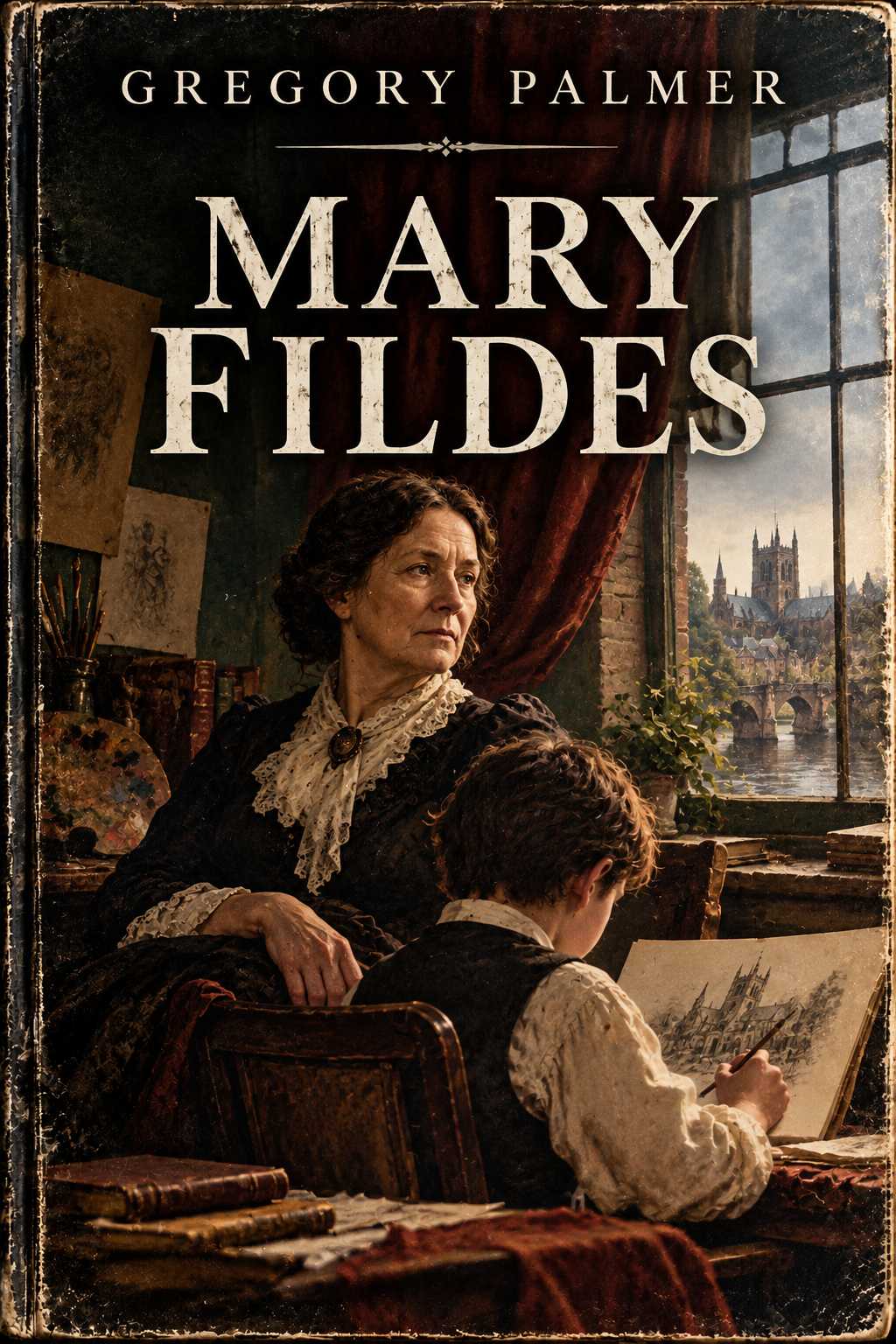
A novel about Mary Fildes, her involvement in the radical politics surrounding Peterloo and her later life in Chester. Palmer is interested in Mary Fildes herself — the radical, campaigner and formidable woman whose political life continued long after the events in Manchester. Greg imbued her with a campaigning zeal, but also with warmth and humanity.
Reviewers said that it was “told with sensitivity and charm about a complex woman striving to make the world a better place.”
THE ANVIL AND THE ROSE — 1990
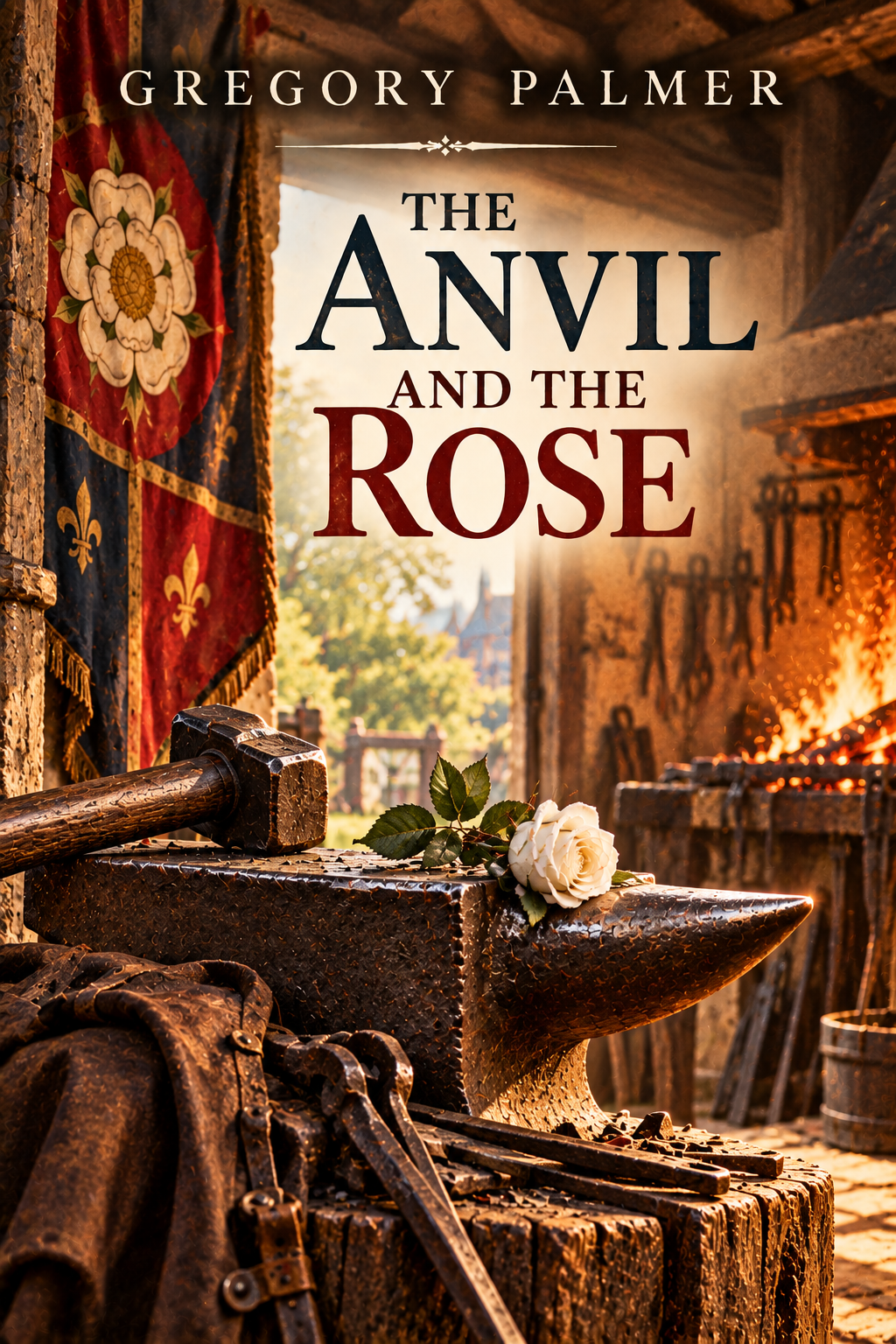
Set during the Wars of the Roses, the story follows a blacksmith whose life is changed forever as the great political struggles of the age reach his forge. The first novel of Greg’s that introduces a fictional character as the central figure of the novel. It allowed Greg to step free from political influences and develop a truly heroic main character. Greg often says that this is the first book he actually enjoyed writing. Its commercial success made him believe he could make a living out of ‘this book writing lark’.
Greg actually spent some time working with the local blacksmith as background to the novel. Asked whether he thought it was a successful strategy, Greg said just two words, “never again.” The novel established one of the recurring themes of Greg’s work: ordinary people caught up in extraordinary moments in history.
A POLYCHRONICON — 1993
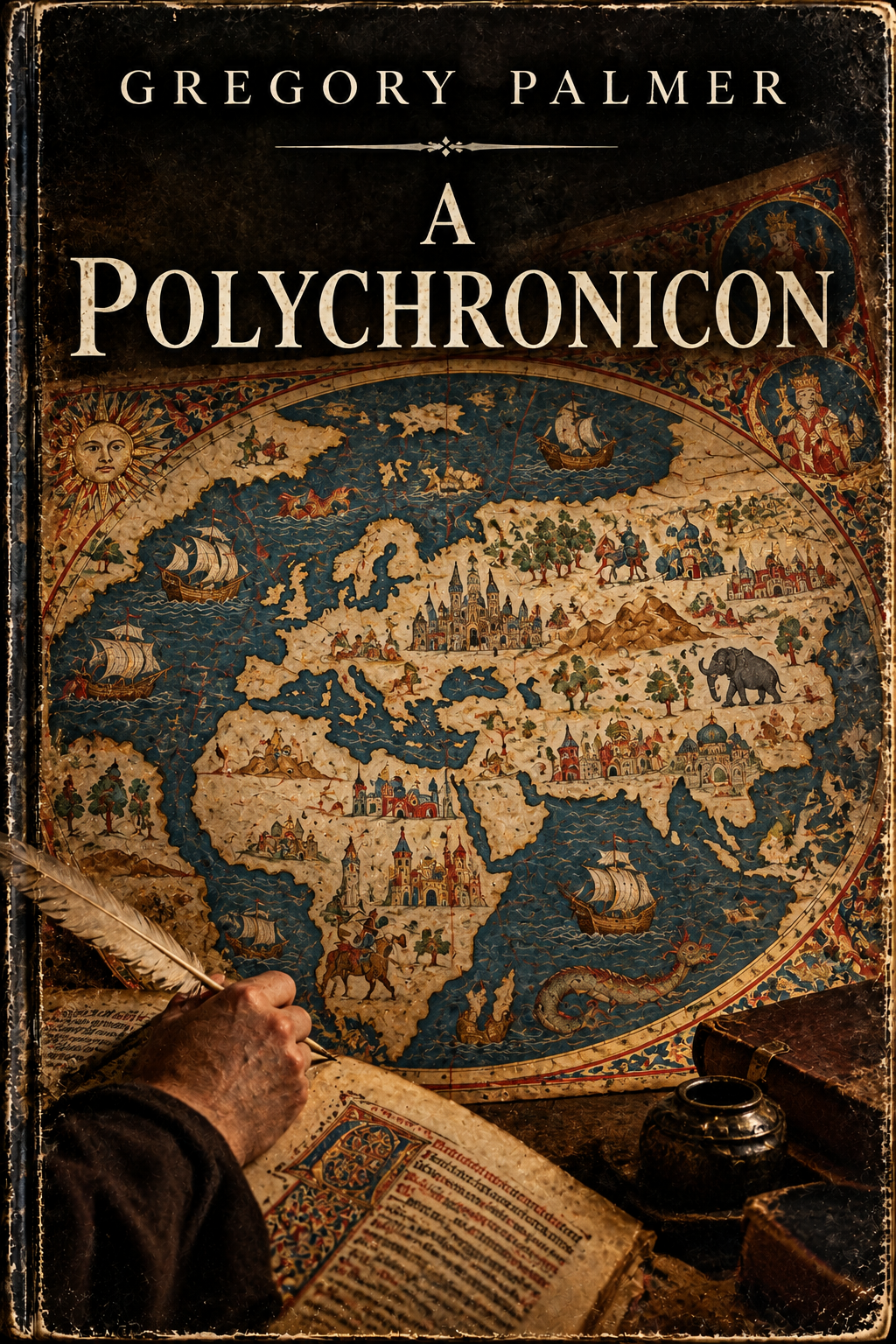
Greg turns to Ranulf Higden, the monk whose Polychronicon attempted to tell the history of the world – from Creation to modern times (i.e. the fourteenth century). Through Higden, Greg explores the extraordinary ambition of trying to make sense of the whole of human history — and the inevitable gap between the world as it happened and the world as we record it. Its sweep ranges from the whole of Creation to the one, solitary monk that tried to capture it all.
It was Greg’s early masterpiece and was nominated for several literary awards.
Reviewers called it: “Palmer’s finest novel to date. A huge novel of ideas about craft, skill, perseverance and the persistence of memory. Highly recommended.”
POMONA — 1996
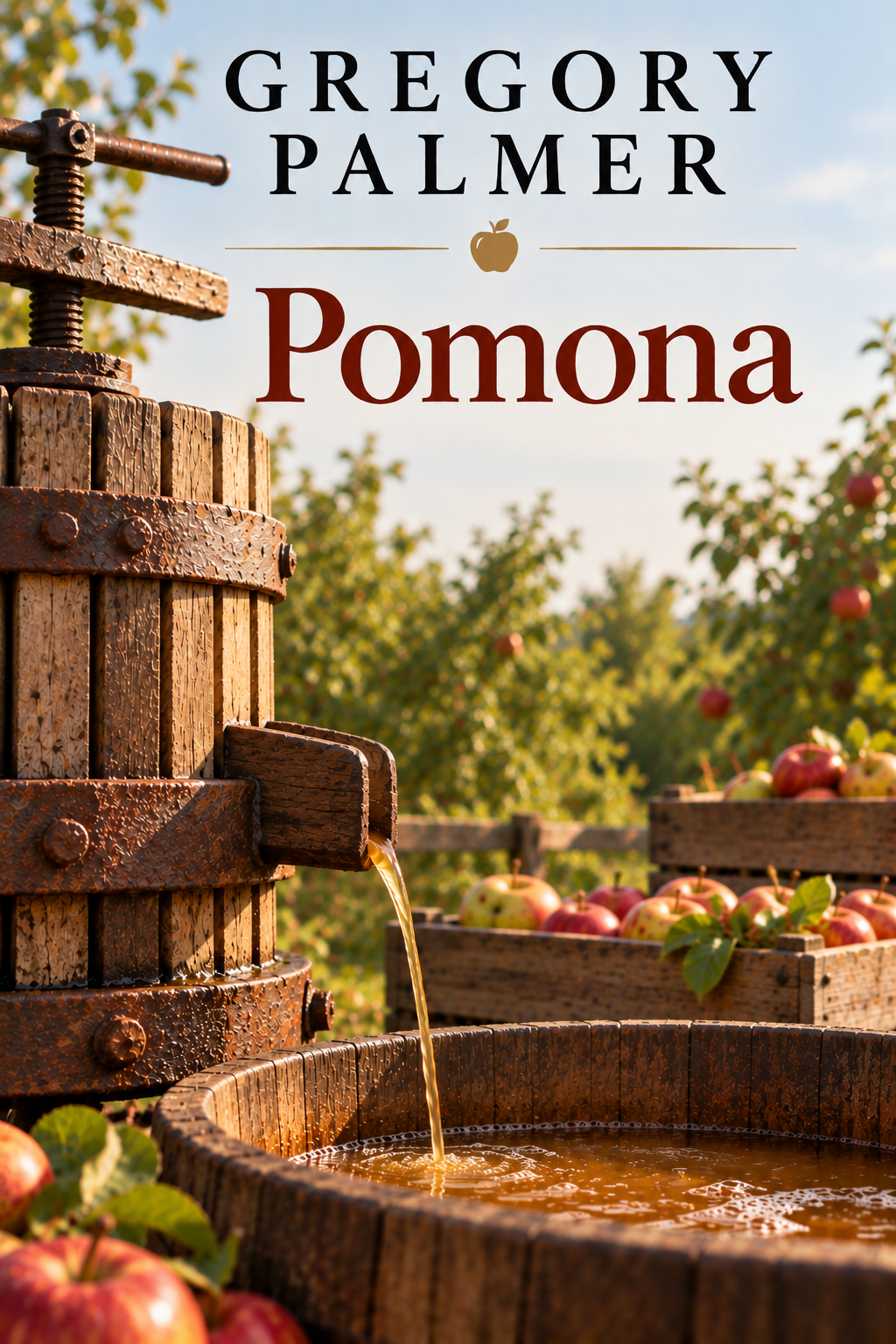
A complete change of pace and direction. Pomona is about country life; apples, cider, horticulture and the relationship between people and the natural world.
Greg turned from medieval history to the cider orchards of the West Country, where the rhythms of the seasons, the work of cider-making and the lives of the people who depend upon the land become inseparable. It is a story about tradition, change and the relationship between people and the landscape.
At its heart is a simple question: what happens to a way of life when the world around it begins to change?
Reviewers called it, “a satisfying blend of people, place and countryside. A hard life brought to vivid detail.”
THE EAST WINDOW — 1998
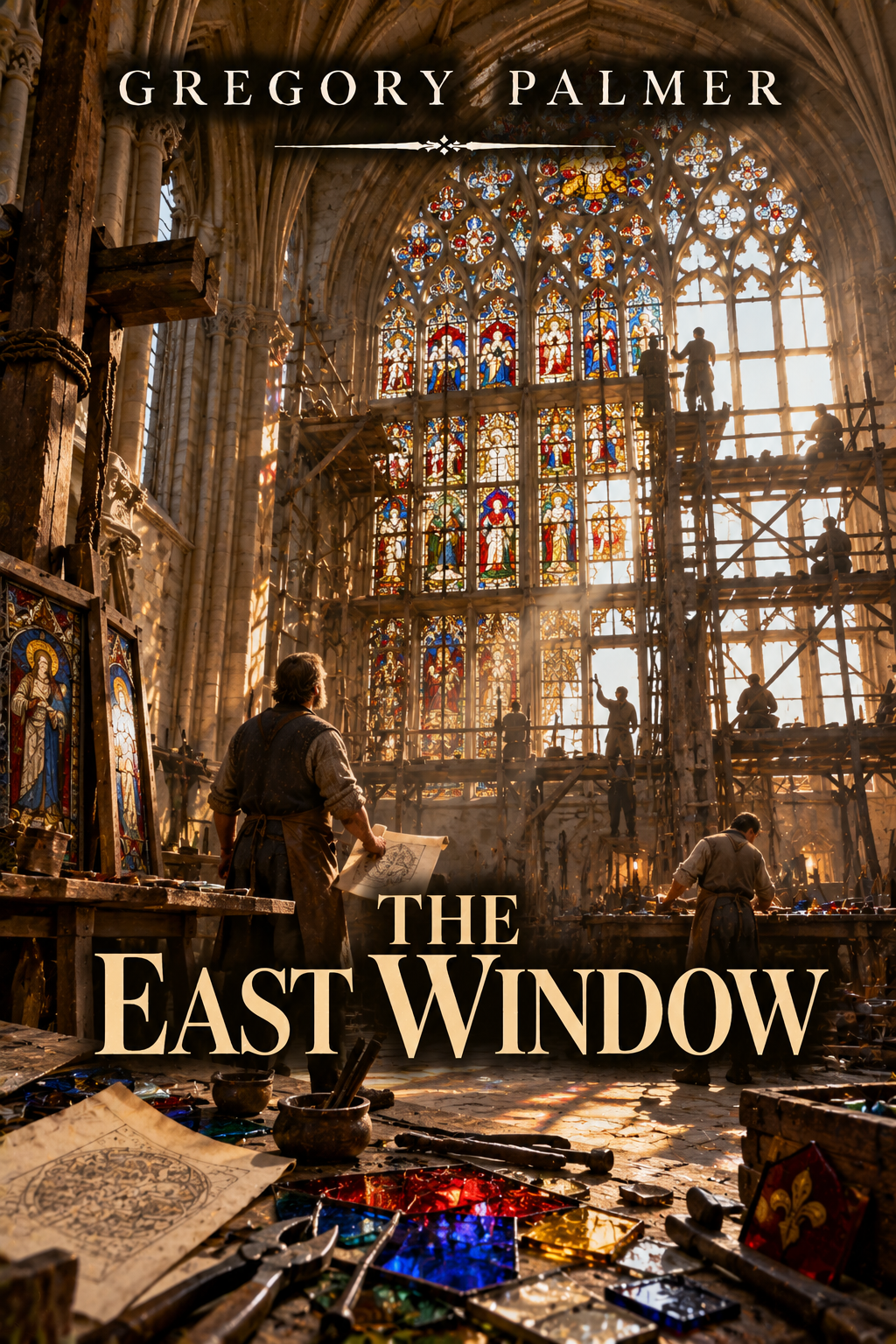
A blockbuster of a novel about John Thornton of Coventry and the creation of the great East Window of York Minster.
Behind the lead, glass and stone is a story of great ambition, craftsmanship and the thousands of individual pieces that were made to create York Minster’s magnificent East Window.
Reviewers said, “this is Palmer doing what he does best, recreating the past by telling us about skills and crafts that have largely disappeared. He explores the lives of people who made wondrous things with honesty and charm.”
THE BALLAD OF JOAN LITTLEWOOD — 2000
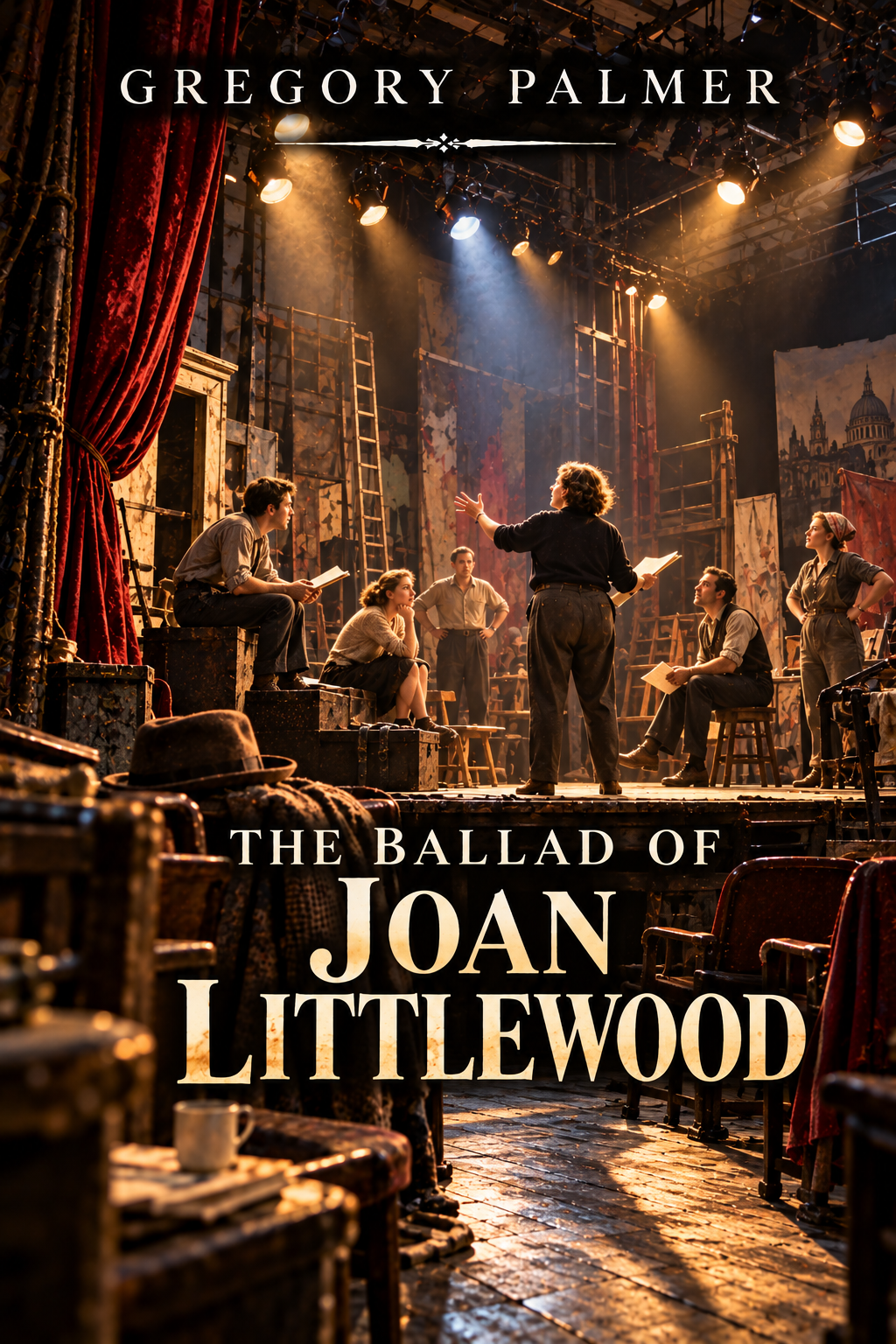
The life and feisty times of Joan Littlewood and her radical approach to theatre.
Joan Littlewood and the Theatre Workshop challenged the conventions of British theatre and transformed the relationship between actors, audiences and the stage. Greg captures her extraordinary energy, her determination to do things differently and her belief that theatre should be alive, accessible and relevant to ordinary people.
One reviewer called it ”Funny, wise and erudite. A fitting tribute to Joan and her passions.”
NONSUCH HOUSE — 2003
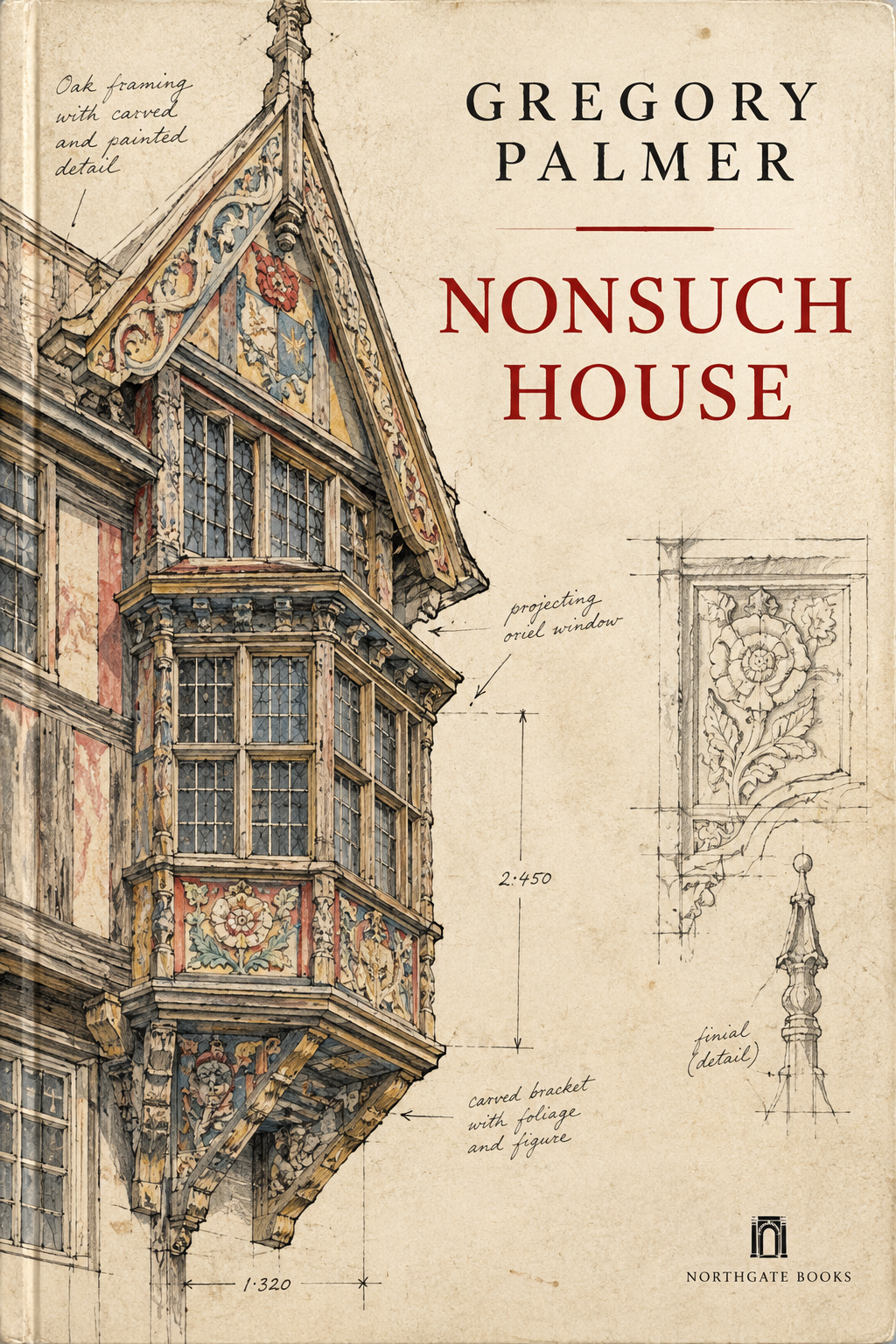
This is the first of three linked novels about the construction of places, ideas and histories. Nonsuch House was the most beautiful building on the old London Bridge.
Nonsuch House stood on London Bridge for more than two centuries, an extraordinary timber-framed building in the midst of one of medieval London’s busiest and most crowded places. Greg brings the building and the people around it to joyous life, recreating the daily world of London Bridge and the lives of those who built it, worked on it and called it home.
”Bringing to life one of London’s finest lost buildings…Palmer gives us an insight into what daily life must really have been like on London Bridge. A joy.”
THE BURNISHED GLOBE — 2006
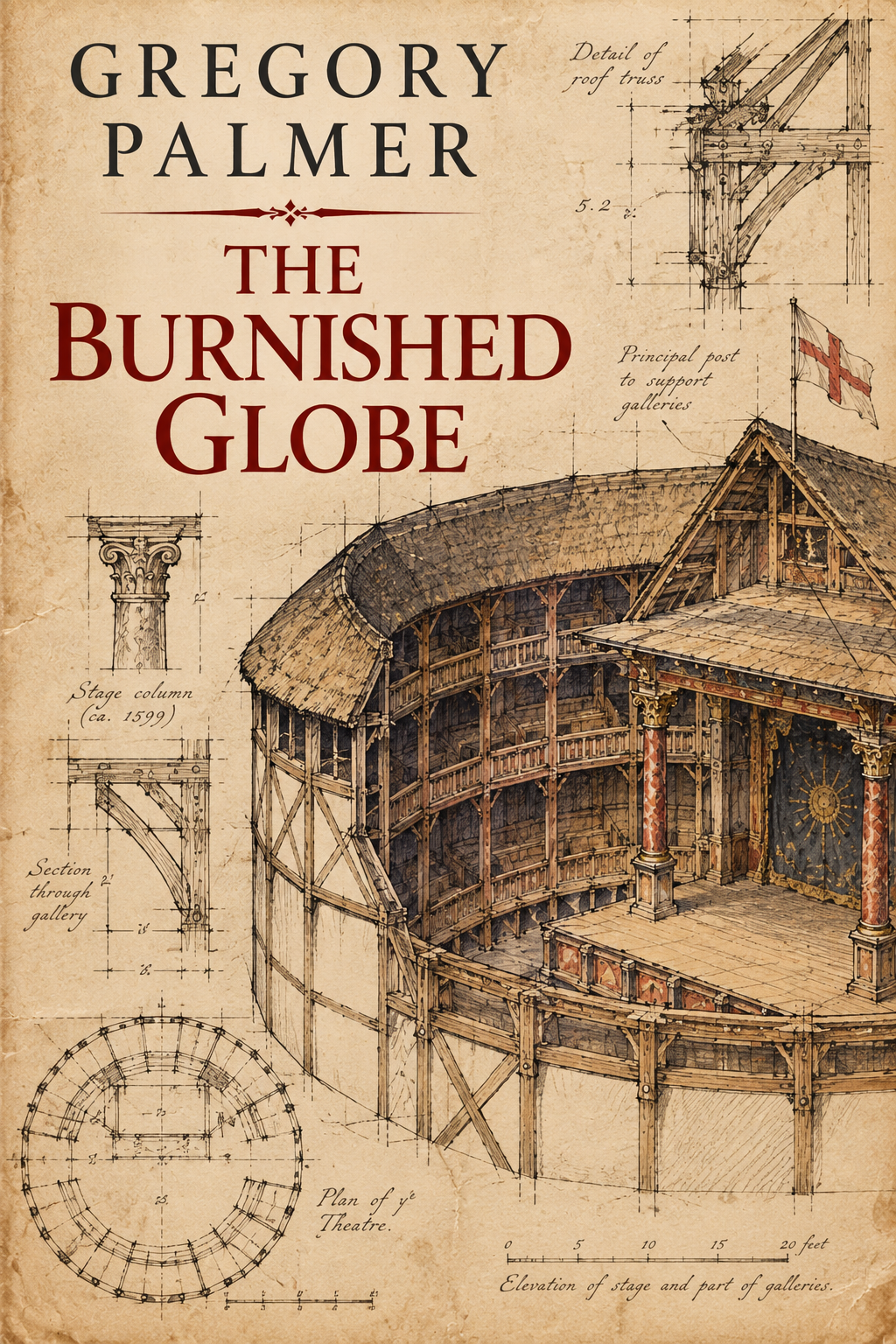
The second novel in the Nonsuch series centred on the construction of Shakespeare’s Globe and its eventual destruction by fire. Greg recreates the lively, often unruly world of the London theatre at the turn of the seventeenth century with undisguised glee.
One reviewer, who clearly loved it, said it was, “A boisterous romp about the dismantling of The Theatre and its rebuilding on the south side of the Thames as The Globe. A riotous assembly of actors, builders, craftsmen and assorted ne’er do wells populate the pages of this rollicking yarn. And then one man sadly watches it all burn down.”
THE TRIUMPHS OF TRUTH — 2009
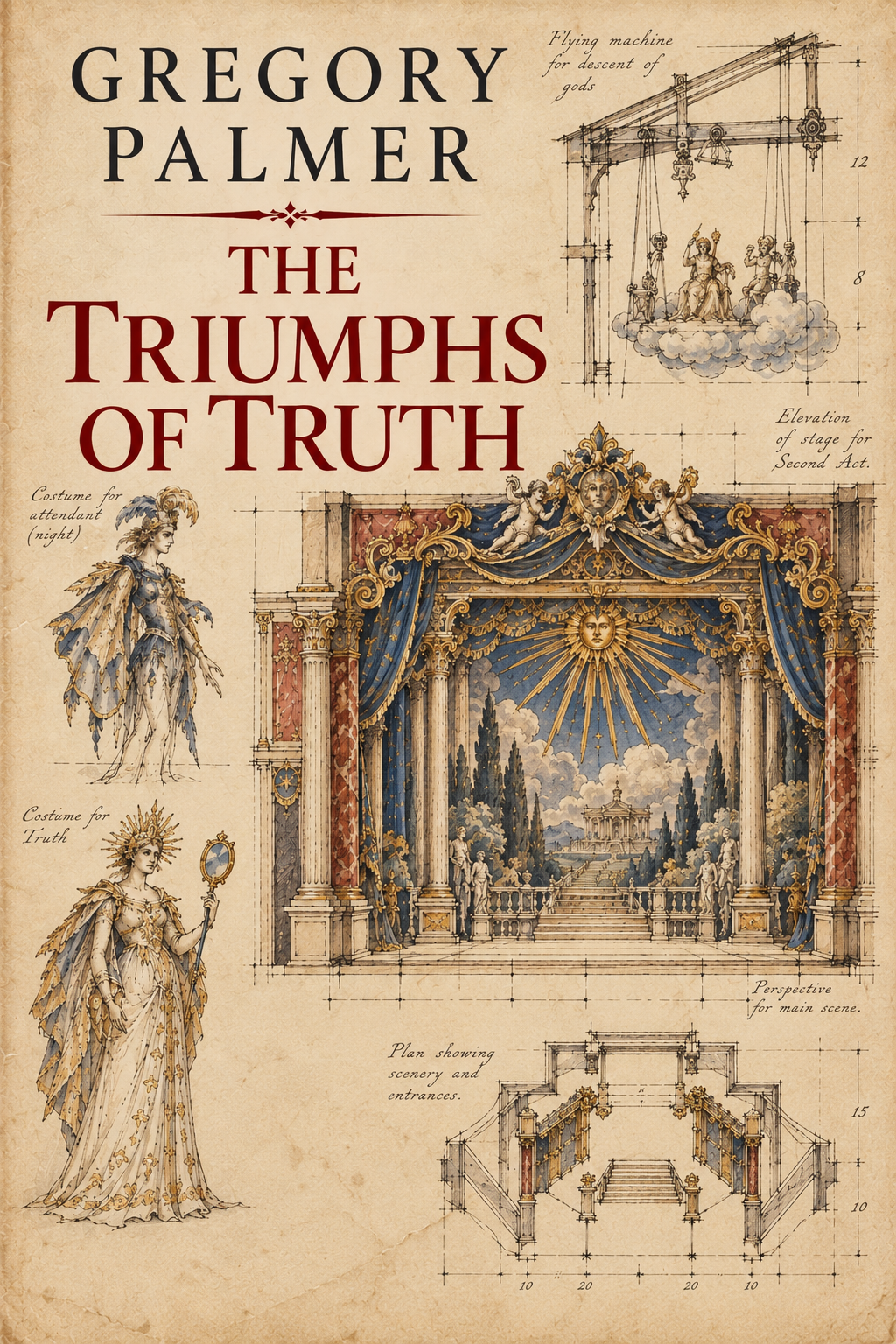
The third novel in the Nonsuch series, concerned with truth, history and the ways in which the past is remembered. Centred again around Sir Nicholas Fennell and the incredible ‘Triumphs of Truth’ Lord Mayor’s Show.
Set in London in 1613, the story centres on Sir Nicholas Fennell and Thomas Middleton’s extraordinary Triumphs of Truth, created for the Lord Mayor’s Show. Greg explores a world where history, politics, civic pride and theatrical spectacle collide, and where Truth itself becomes a spectacular pageant.
“This is a fitting end to this ambitious trilogy. Sir Nicholas Fennell presides over The Lord Mayor’s Show in the shadow of the now derelict Globe Theatre. A story of spectacle, shock and surprise and one man’s mission to keep it all moving.”
THE HOP POCKET – 2012
A hymn of praise to the hop pickers of Kent and their daily struggles, their routines and their lust for life. Across generations, the lives of the people who came to the Kent hop fields unfold through the eyes of Margaret, a local historian determined to record the stories of a way of life that was fast disappearing.
Through Margaret’s research, Greg brings together the memories, characters and stories of the hop fields — creating a portrait of a community as much as a history of hop picking.
“A hymn of praise to a life largely lost and forgotten.”
THE PILGRIMAGE — 2015
All about the Via Francigena, the pilgrimage from Canterbury to Rome, its paths and the people who have walked it. From Sigeric the Serious in the tenth century to pilgrims walking the trail today, Greg gives us a personal history of what it’s like to walk 1,300 miles.
From early medieval times to the present, Greg connects us to a world where the only really important concern is your next footstep.
”Palmer’s most personal book to date. It’s the story of how he and his wife walked from Canterbury to Rome, the people they met on the way and those in whose shadow they walked.”
GIVE US THIS DAY -2019
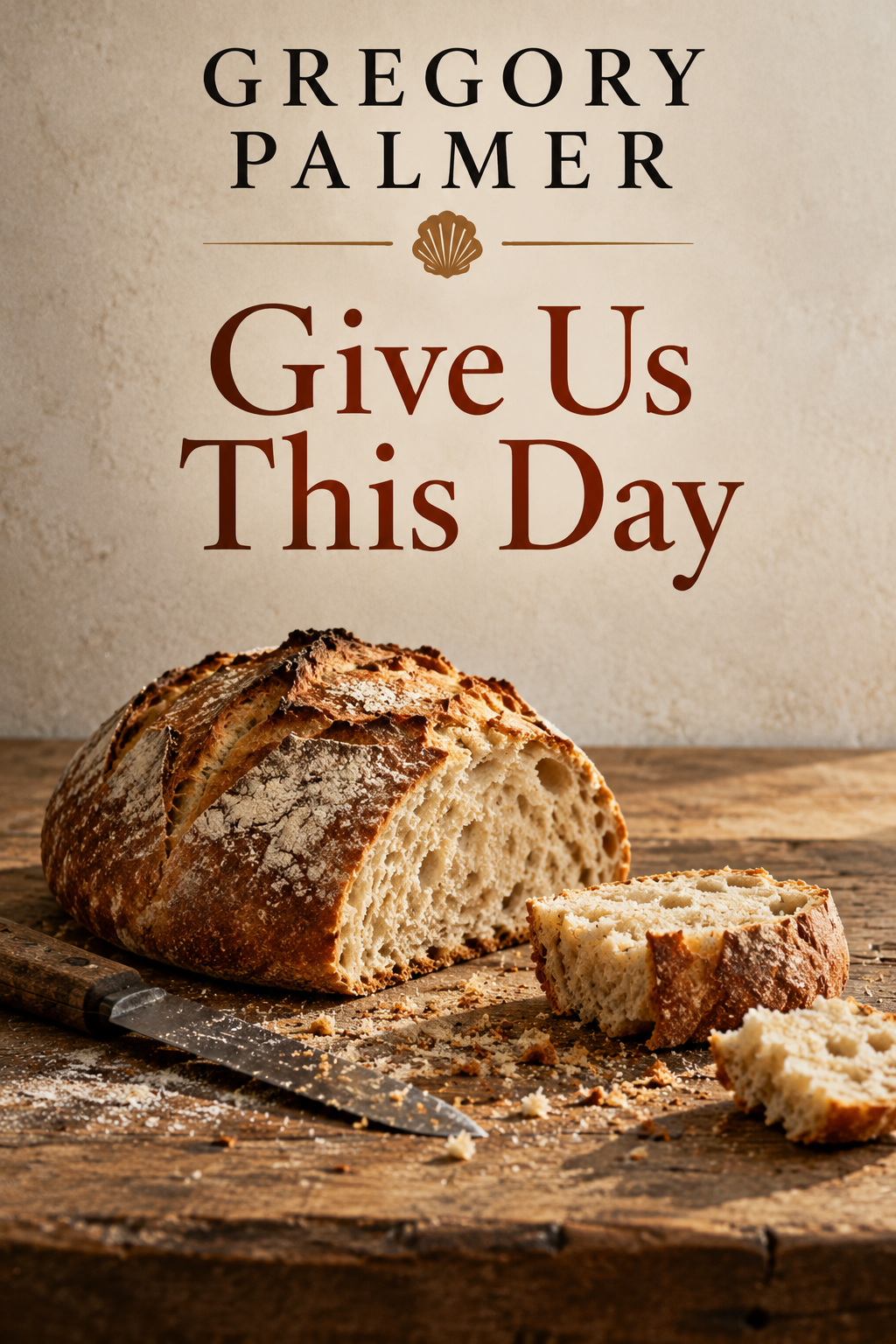
Give Us This Day is a novel about bread and companionship, following the people whose lives are bound together by the making, selling and sharing of bread. It is a story about work, friendship and community — and about the ordinary things that sustain us, which is perhaps why it acquired an unexpected resonance when the world went into lockdown in 2020, when bread, flour and human connection seemed to matter more than they ever had done before.
It was a completely unexpected success giving Greg a moment in the sun online and on podcasts. For a brief period he caught the zeitgeist. “I can’t get my head around it”, he said shrugging in disbelief. It sparked a huge interest in Greg’s earlier work and the re-release of his whole back catalogue.
THE NAVIGATION – 2023
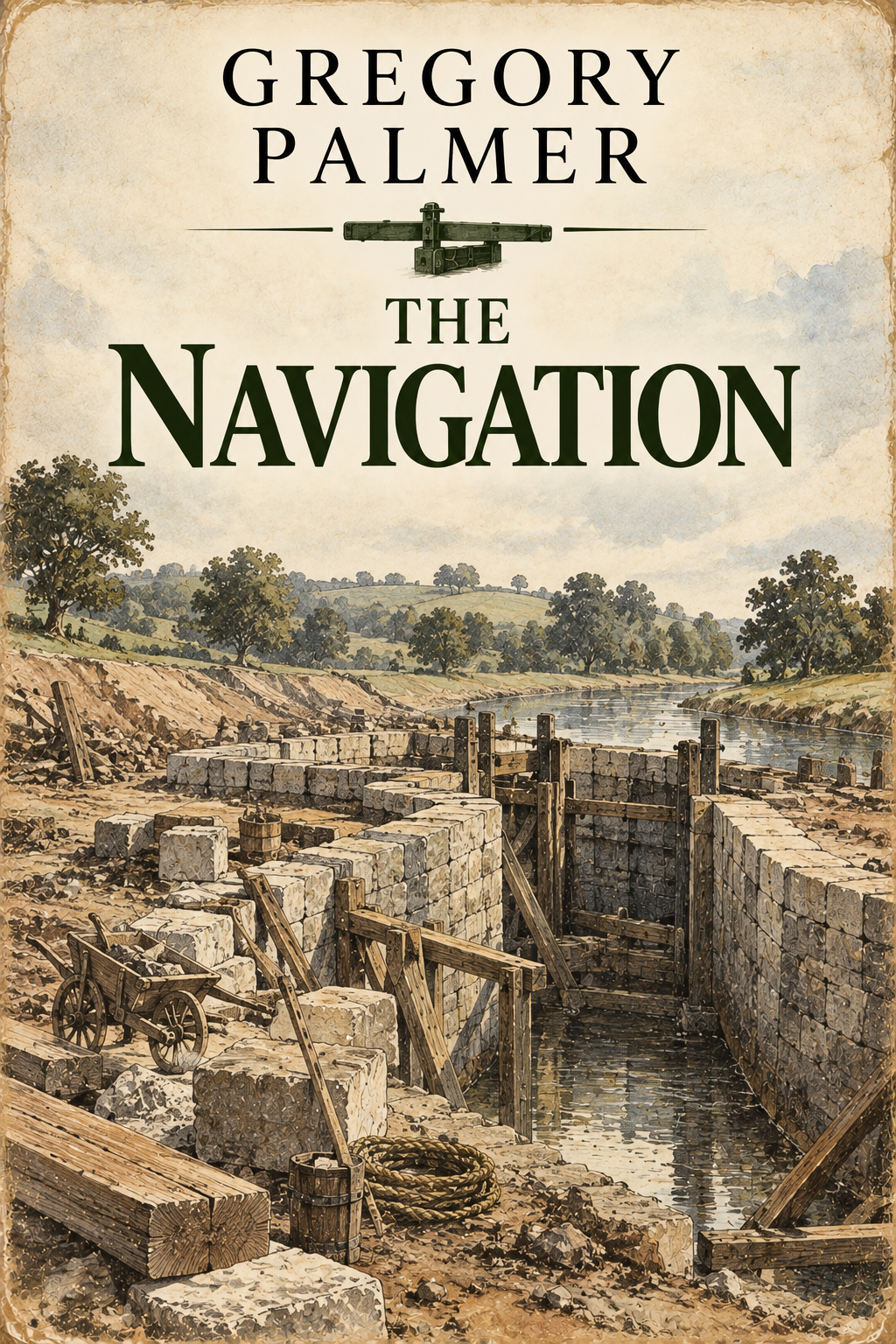
The Navigation is the story of the people who built Britain’s canals — the navvies and engineers who cut through hills, raised embankments and built locks in the pursuit of a new industrial age, and of the communities whose lives were transformed by these new waterways.
It is a novel about ambition, hard work and the extraordinary human cost of reshaping the landscape. It’s about the people who built the canals and those who now make them their home. In many ways, it is about Greg’s desire to record a world whose passing evokes nostalgia and a sense of loss, but there’s also a great deal of pride to be recovered from the fact of its existence in the first place.
After this novel, Greg decided to call it a day and to retire to spend more time with Alice. Jack and Bella had other ideas.
JACK, BELLA AND ME — FINAL NOVEL
Written after Greg believed he had retired. Jack kept asking Greg to write a history of the Black Swan. Eventually he succumbed. But not without lots of pressure, hassle and downright whinging from Jack. Greg thought he was writing an unreliable history of the Black Swan, along the lines of Jack’s ideas for ‘Life Behind Bars’. The story gradually became Greg’s final book, ‘Jack and Bella’.